The Development of Pharmacy Education at the Faculty of Medicine, University of Maribor: A Chronological Review Leading to the 2025 Accreditation
Razvoj študija farmacije na Medicinski fakulteti Univerze v Mariboru: kronološki pregled do akreditacije leta 2025
DOI:
https://doi.org/10.18690/actabiomed.295Keywords:
Pharmacy education, Accreditation, Curriculum development, Clinical pharmacy, Pharmaceutical industry, University of MariborAbstract
Background: Establishment of the Integrated Master’s Programme in Pharmacy at the Faculty of Medicine, University of Maribor (MF UM [Maribor, Slovenia]) was driven by national pharmacist shortages, expansion of the pharmaceutical industry, increasing clinical pharmacy needs, and harmonisation under EU Directives 2013/55/EU and 2024/782/EU. These factors underscored the necessity of a second accredited pharmacy programme in Slovenia. This review summarises the development that led to accreditation in December 2024.
Methods: A chronologic document-based review was performed using institutional archives, three accreditation applications, reports from the Slovenian Quality Assurance Agency for Higher Education (NAKVIS), internal strategic analyses, collaboration agreements, and national statistical data. These materials were integrated with the scientific literature on pharmacy education and EU regulatory frameworks to identify structural, pedagogic, and contextual elements shaping the final programme.
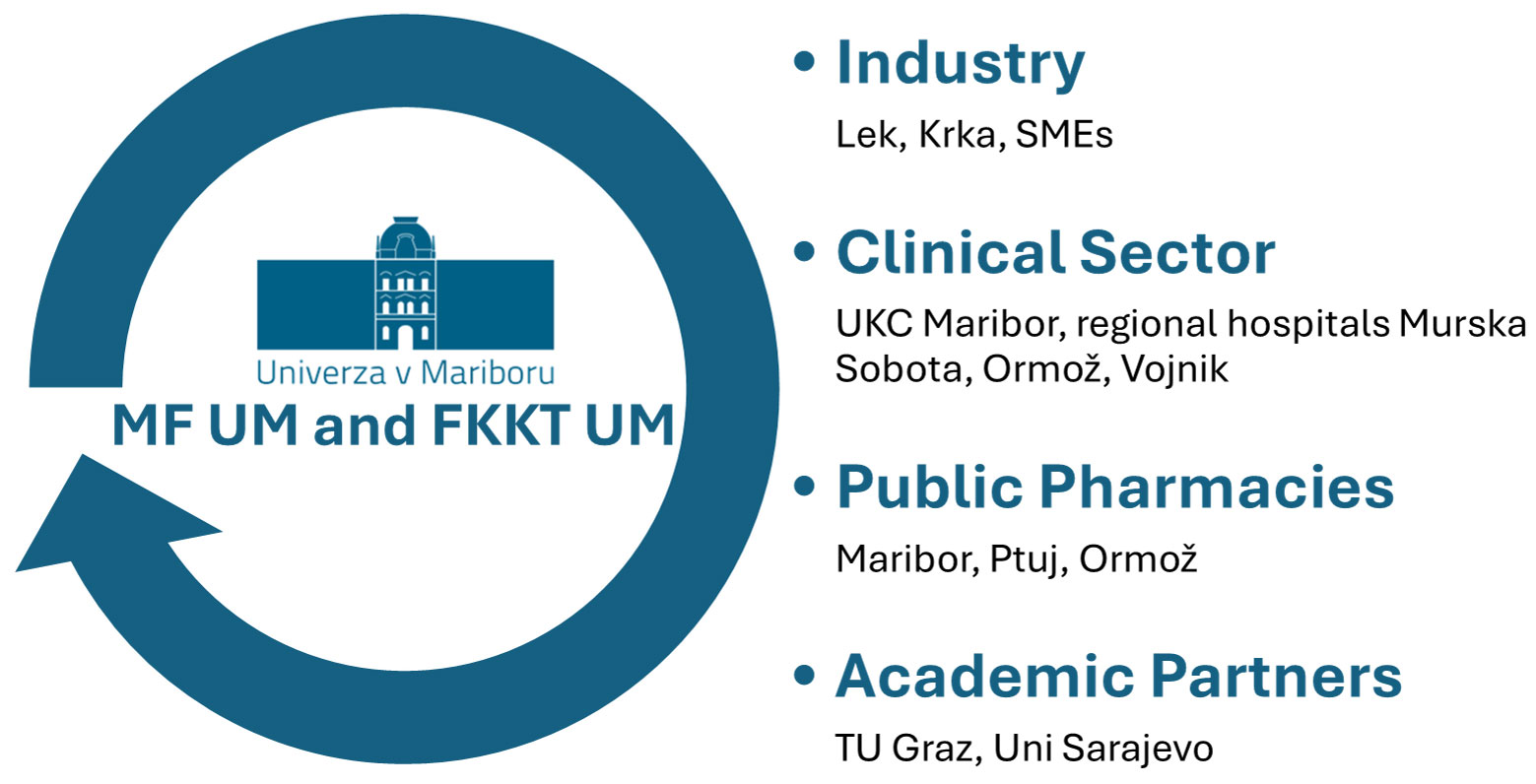
Results: Development of the Integrated Master’s Programme in Pharmacy progressed through three phases: early conceptualisation (2006–2016); two accreditation attempts (2017–2020), which clarified curricular, staffing, and competency gaps; and a comprehensive redesign (2021–2024) involving interdisciplinary collaboration among the MF UM, Faculty of Chemistry and Chemical Engineering, University of Maribor (FKKT UM), clinical institutions, and pharmaceutical industry partners. The final curriculum was aligned with EU competence requirements and integrated biomedical, technological, analytical, and enhanced clinical sciences. Strong inter-faculty collaboration and robust clinical and industrial components were formalised through extensive partnerships.
Conclusions: The programme represents a significant advance for Slovenian pharmacy education, addressing national workforce needs, strengthening regional development, and complementing existing educational capacities. Establishment of the Integrated Master’s Programme in Pharmacy at the MF UM highlights the value of strategic planning and cross-sector collaboration in contemporary pharmacy education.
Downloads
Downloads
Published
Issue
Section
License
Copyright (c) 2025 Uroš Maver, Ivan Krajnc, Iztok Takač, Tina Maver (Author)

This work is licensed under a Creative Commons Attribution 4.0 International License.