Treatment outcome of patients with acute ST-elevation myocardial infarction (STEMI) vs. non-ST-elevation myocardial infarction (NSTEMI)
Primerjava izhoda zdravljenja bolnikov z akutnim miokardnim infarktom z dvigom veznice ST (STEMI) z bolniki brez dviga veznice ST (NSTEMI)
DOI:
https://doi.org/10.18690/actabiomed.308Keywords:
acute myocardial infarction with sustained ST elevation, acute myocardial infarction without sustained ST elevation, mortality, rehospitalization, percutaneous coronary interventionAbstract
Purpose: There are both similarities and differences in the baseline clinical characteristics, treatment strategies, and outcomes between patients with ST-segment elevation myocardial infarction (STEMI) vs. non-ST-segment elevation myocardial infarction (NSTEMI). The purpose of this study was to compare mortality and rehospitalization rates between STEMI and NSTEMI patients.
Methods: In this retrospective study, baseline clinical characteristics, treatment strategies, and outcomes were compared among 491 STEMI and 304 NSTEMI patients admitted from January to December 2023. Percutaneous coronary intervention (PCI) was the main reperfusion strategy. Outcomes included in-hospital, 30-day, and 6-month mortality rates, as well as rehospitalization rates within 6 months.
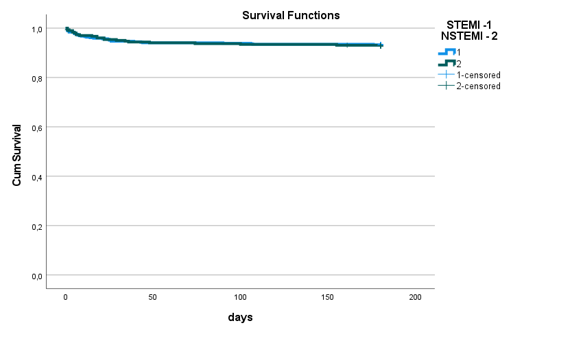
Results: NSTEMI patients were significantly older and had more comorbidities, whereas STEMI patients were more frequently smokers, more frequently required resuscitation, and had more extensive myocardial injury. Early PCI (within the first 24 h) was performed significantly more often for STEMI than NSTEMI patients (90.6% vs. 45.1%, p < 0.001), and all patients received guideline-recommended antithrombotic therapy. Acute in-hospital heart failure was more prevalent in STEMI patients (28.9% vs. 20%, p = 0.02). There were no significant differences in in-hospital, 30-day, and 6-month mortality rates between STEMI and NSTEMI patients (5.5% vs. 5.6%, 5.5% vs. 4.6%, 6.7% vs. 7.2%, respectively). However, NSTEMI patients were more frequently rehospitalized.
Conclusions: NSTEMI patients were older and had more comorbidities, whereas STEMI patients had more extensive myocardial injury and a higher prevalence of acute in-hospital heart failure. More frequent use of early PCI in STEMI patients, combined with appropriate pharmacological therapy, may explain the similar mortality rates observed between STEMI and NSTEMI patients, despite a higher rate of rehospitalization rate in NSTEMI patients.
Downloads
Downloads
Published
Data Availability Statement
The data that support the findings of this study are available from the corresponding author upon reasonable request. The data are not publicly available due to ethical concerns.
Issue
Section
License
Copyright (c) 2026 Tea Kovačić, Luka Jančič, Martin Marinšek, David Šuran, Andreja Sinkovič (Author)

This work is licensed under a Creative Commons Attribution 4.0 International License.