Fitz-Hugh–Curtis Syndrome in an Adolescent Athlete: MRI Diagnosis of an Atypical Presentation
Fitz-Hugh–Curtisov sindrom pri adolescentki: zapoznela diagnoza subtilne klinične slike
DOI:
https://doi.org/10.18690/actabiomed.294Keywords:
Fitz-Hugh-Curtis syndrome, PID, MRI, Chlamydia infections, Shoulder painAbstract
Purpose: To emphasize the diagnostic role of magnetic resonance imaging (MRI) in identifying Fitz-Hugh–Curtis syndrome (FHCS) in an adolescent patient with a subtle
clinical presentation.
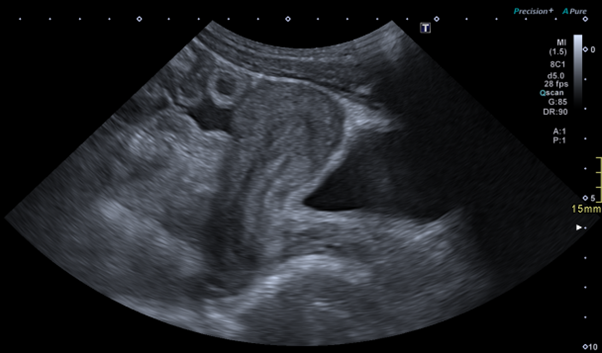
Methods: A 17-year-old female presented with acute onset right upper quadrant and right shoulder pain. The initial diagnostic workup, including ultrasound (US), computed
tomography (CT), and laboratory testing was inconclusive. Due to persistent symptoms and elevated inflammatory markers, MRI of the abdomen and pelvis was subsequently
performed.
Results: MRI demonstrated a bilateral pyosalpinx with restricted diffusion, free fluid in the pelvis and subhepatic region, and linear adhesions between the hepatic capsule and peritoneum, which was consistent
with pelvic inflammatory disease (PID) complicated by FHCS. Microbiologic analysis confirmed a Chlamydia trachomatis infection. The patient received targeted antibiotic therapy with clinical improvement.
Conclusion: FHCS represents a rare but important
complication of PID that may present with non-specific
or extra-pelvic symptoms. MRI is the modality of choice
for confirming PID-related complications and perihepatic inflammation, offering high sensitivity and the advantage of radiation-free imaging, which is especially relevant in the adolescent population.
Downloads
Downloads
Published
Issue
Section
License
Copyright (c) 2025 Eva Čokolič, Lucijan Lučič Šrajer, Ivana Kodrič, Sarah Dobnik, Matija Žerdin, Irmina Sefić Pašič (Author)

This work is licensed under a Creative Commons Attribution 4.0 International License.